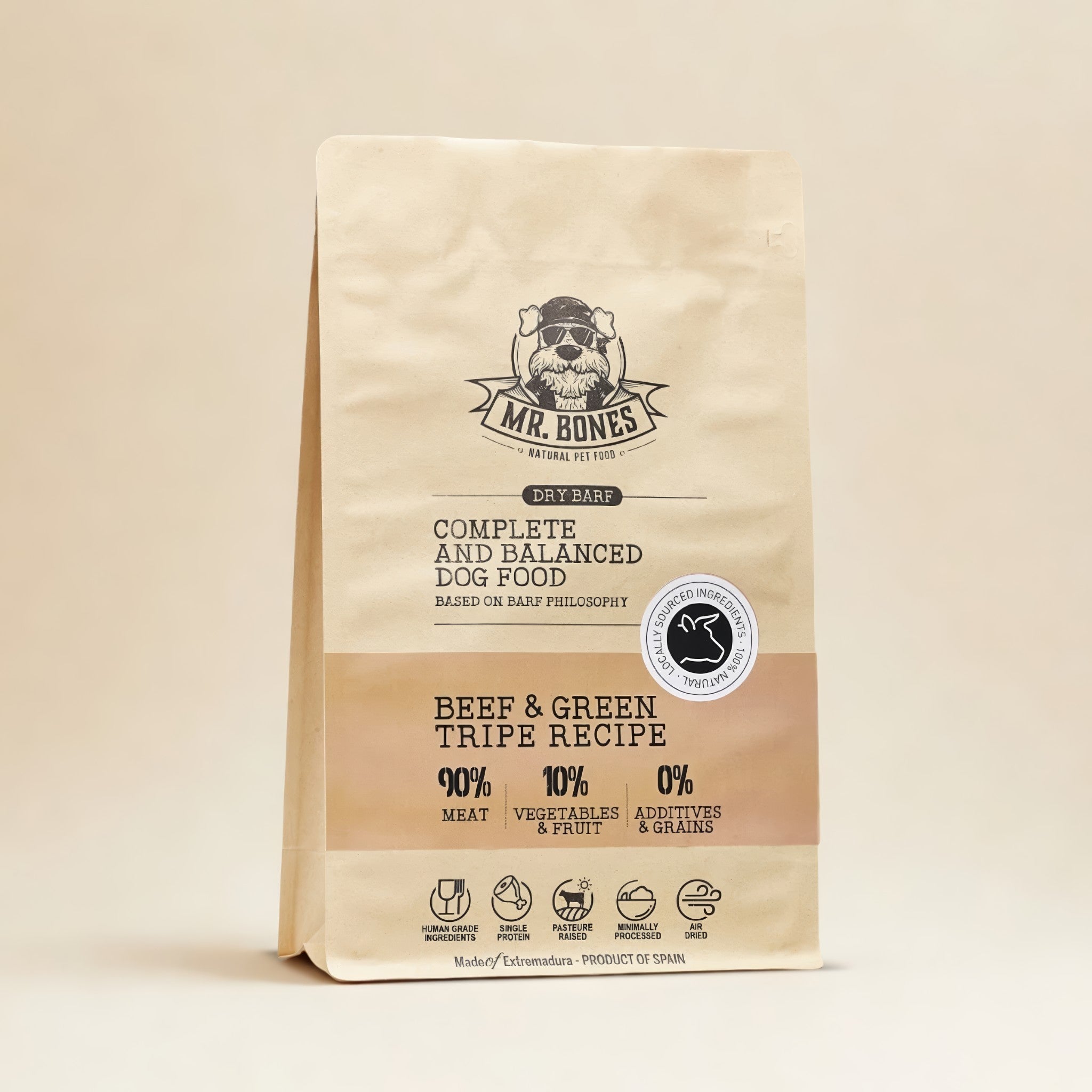
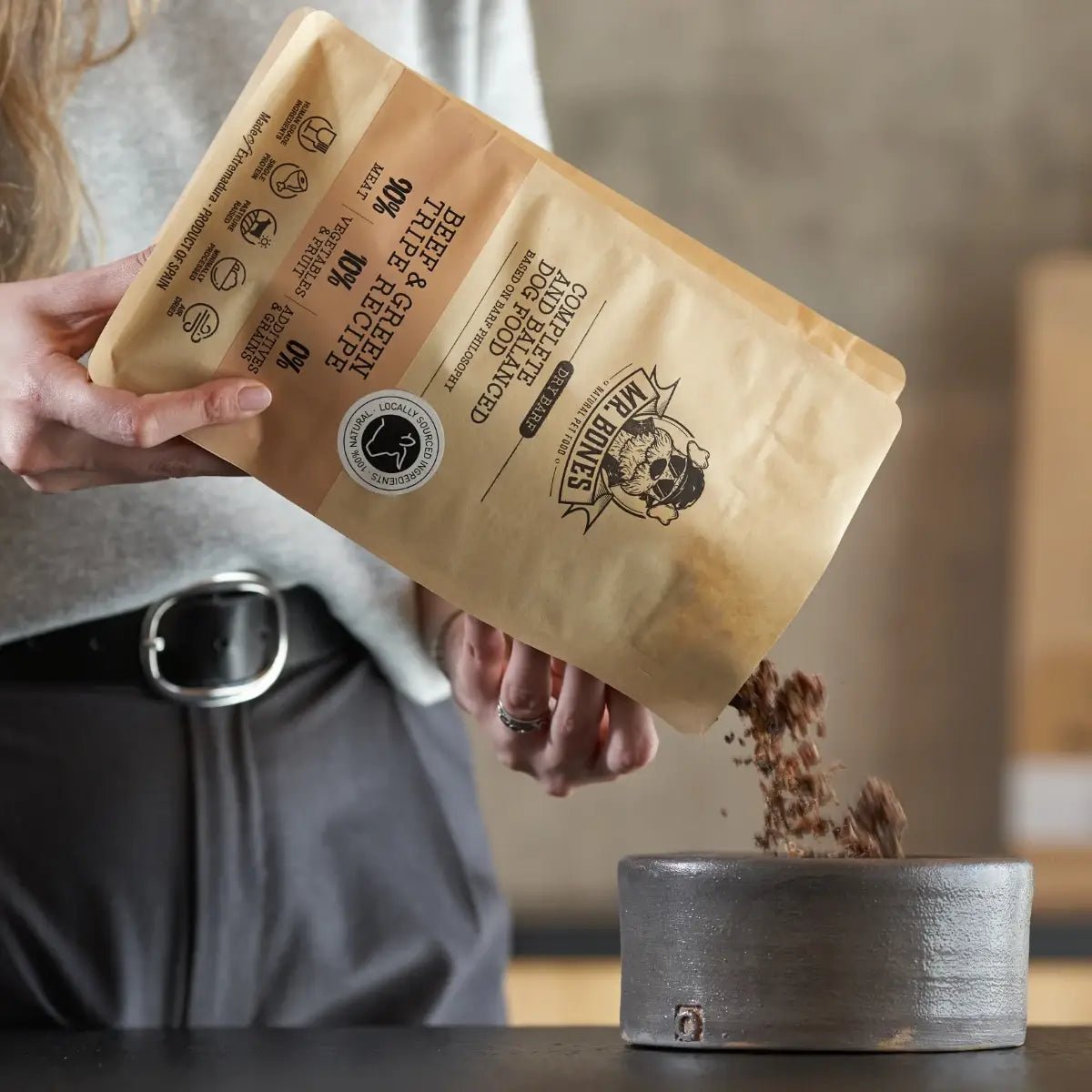
What makes this BARF food desirable compared to traditional kibble?
BARF relies on minimally processed animal-based ingredients, so the flavor and natural nutrients are better preserved. Many notice differences in coat shine, stool volume, and the dog's overall vitality when there are fewer fillers and less intense cooking. This is especially interesting for active breeds such as border collie, australian shepherd, and whippet.
Who is this product suitable for – puppies, adults, or seniors?
BARF is suitable for most dogs at all life stages when the portion size is adjusted according to age, weight, and activity. For example, a mittelspitz puppy starts with a smaller amount, an active adult (such as a kelpie) can have the portion increased during training periods, and for seniors (e.g., golden retriever) a softer serving makes eating easier. Measure your dog and monitor condition, and ask us for clarifications if needed.
How should I serve it – dry or soaked?
You can serve the pieces as they are or soften them in warm water for a few minutes. For small breeds (kooikerhondje, bichon havanais) and seniors, soaking makes the mouthfeel gentler, while larger eaters (samoyed, flat-coated retriever) often eat the pieces as is. Test the texture your dog prefers.
How do I make a smooth transition to BARF?
Switch to the new food gradually over 5–10 days: increase the BARF portion and decrease the old food according to your dog's stomach. For sensitive stomachs (e.g., lagotto romagnolo, poodle) proceed especially calmly and monitor stool consistency and overall vitality. If necessary, take “break days” during portion changes.
Why is a simpler ingredient list an advantage for sensitive dogs?
A shorter, transparent ingredient list makes it easier to identify potential irritants. If your dog, such as a labrador retriever, shetland sheepdog, or mudi, has reacted to mixed proteins, a simple BARF recipe is a natural experiment. Start with small amounts and monitor skin, ears, and stomach.
Does BARF help picky eaters?
Air-dried/dried meat smells and tastes appealing to most dogs. You can add a splash of warm water at first or offer part of the portion from an interactive toy – “hunting” often excites selective eaters like spanish water dog or hovawart. Keep a regular feeding schedule.
Can this be used as training treats and for enrichment?
Yes – the pieces crumble easily by hand and work well as rewards for obedience training, nose work, and reinforcing small tasks. Small pieces are also suitable for small breeds (parson russell, miniature poodle) and maintain focus without separate treats.
How can BARF support the daily life and recovery of an active dog?
Natural animal protein and fatty acids provide long-lasting energy and support muscles. Breeds that enjoy running and hiking (Siberian husky, vizsla, border collie) often benefit from a well-digestible energy package. Portion size is adjusted according to training amounts.
How do I choose the right “size” or package amount?
A smaller bag is good for testing, occasional treats, or a small dog (sheltie, miniature poodle). Medium-sized dogs (cocker spaniel) benefit from a larger batch to keep daily life smooth, and large dogs (samoyed, flat-coated retriever) naturally consume the largest packages. If you are unsure, message us – we help size the amount.
How do I store the product safely?
Store in a dry and cool place, protected from light, with the bag tightly closed. The air-dried/dried form is convenient for everyday life and travel, and does not require freezing. Always close the bag after use to keep aromas and texture good.
What benefits can BARF have for coat and skin?
When the diet focuses on high-quality animal parts and avoids unnecessary additives, many owners report a brighter coat and calmer skin. This is especially visible in breeds that require a lot of coat care, such as collies and hovawarts. Always monitor your dog's individual reaction.
Is BARF a “complete food” or should something be added?
If the product is labeled as complete food, it is designed to cover daily needs when fed according to instructions. If it is a complementary food, it is given as part of a varied diet. When information is missing, proceed cautiously: keep the base food clear and add this thoughtfully, monitoring the dog's condition.
How does BARF differ from “raw feeding” in practice?
This product makes the idea of raw feeding an easy routine: it stays at room temperature, doses neatly, and is easy to take for training or travel. So you get the benefits of natural feeding without the hassle of freezer and thawing. For many, it is the “best of both worlds” option.
How do I assess suitability for different breeds and sizes?
For small dogs (bichon havanais, kooikerhondje) consider softer serving and moderate portions; for medium-sized (cocker spaniel, nova scotia duck tolling retriever) monitor weight management; for large (samoyed, flat-coated retriever) focus on sufficient energy amount. Breed is indicative – measure your dog and adjust portions according to daily activity.
Where can I find a high-quality and natural BARF option for my dog?
Muotitassu curates the market’s most beautiful and expert selection: high-quality BARF products made with transparent ingredients and reliable brands whose style suits the modern dog family. We help choose according to breed, age, and lifestyle – that’s why you can easily find a solution that works for you without guesswork.