

Eka ruoka jota minun koirat syö mielellään.
Dry BARF villi peura – viljaton täysravinto koirille


 Iberico Sika
 Kalkkuna
 Naudanliha
 Peura
Peura
 Kana
Kana
Pay securely
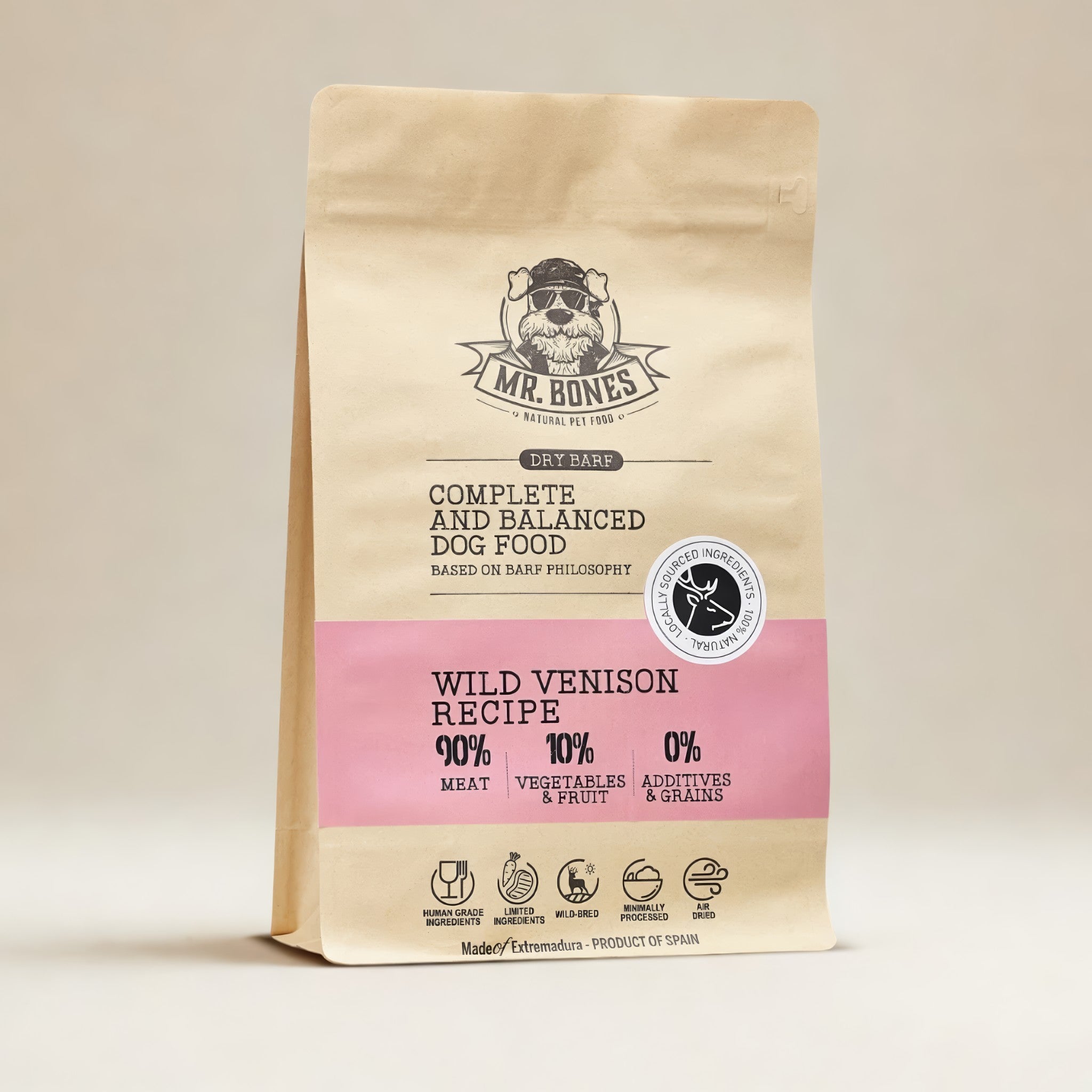
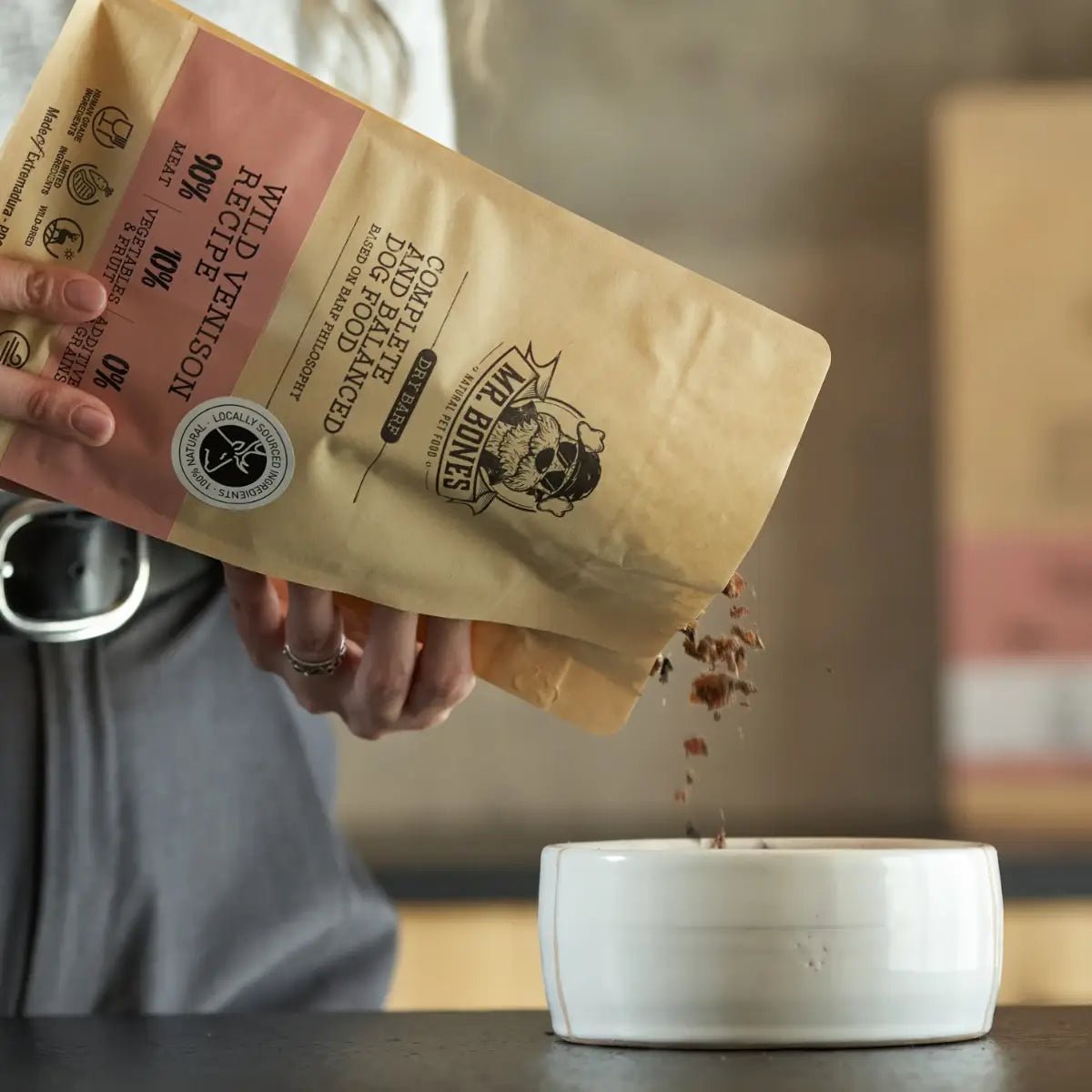
Mr.Bones Dry BARF wild deer is an easy way to offer a BARF-style, natural meal without freezing. The air-dried pieces smell truly like meat and are also suitable for picky dogs. You can serve the pieces as they are or moisten them with warm water in just a few minutes. The dense nutrient composition supports muscle and provides steady energy for walks, training sessions, and trips. Grain-free and a clear ingredient list also make everyday life easier for more sensitive dogs.
Composition (dried): deer meat 75 % (muscle meat 35 %, heart 16 %, trachea 14 %, liver 5 %, spleen/kidney/lung 5 %); beef tripe 15 %; fruits and vegetables 10 % (apple, carrot, zucchini, beetroot); eggshell; herbs (rosemary, thyme).
Analysis (typ.): protein 63 %, fat 27 %, fibre 2 %, moisture 5 %, ash 4 %; gross energy 618 kcal/100 g (metabolic energy approximately 490 kcal/100 g). Calcium 1.1 %, phosphorus 0.9 % (Ca:P ≈ 1.2:1). Natural variation may occur between batches.
Indicative daily ration dry (adults):
1 kg = 21 g, 5 kg = 58 g, 10 kg = 104 g, 20 kg = 181 g, 30 kg = 242 g. The portion depends on age, metabolism, and activity level. You can divide the amount into several meals.
General feeding guide when moistened: for an adult, approximately 2–3 % of the dog's body weight per day, for puppies approximately 4–6 % depending on the growth stage. Monitor condition and adjust the amount as needed.
Mr.Bones is a Spanish natural food brand that produces its recipes in bakeries suitable for human food. The meat comes from trusted family farms. Fruits and vegetables are sourced from local growers who work in the same respectful manner.
Quality starts in the field, and locality is not a trend for us but a committed way of operating. The philosophy emphasizes clear ingredients, gentle production, and the dog's well-being. Mr.Bones Dry BARF is designed to function both as a complete food and as a versatile mix and topper.
Store the contents of the bag in a cool, dry place, protected from sunlight. Close the bag carefully after use. When transitioning to a new food, mix Dry BARF with the familiar food for 7–10 days according to your dog's stomach. While travelling and training, the pieces can also be used as natural treats or crumbled into small toppers on top of other meals.

Overall rating: 4.5 / 5 from 6 reviews.
Eka ruoka jota minun koirat syö mielellään.
Dry BARF villi peura – viljaton täysravinto koirille

Allergioiden takia halusin valita tämän. Daisy on todella hankala ruokittava, kun mikään ei maistu. Tämä kelpaa, kuten näette. Rakenteeltaan vaikuttaa kuivatulta herkulta. Varmasti toimii myös namupaloina.
Dry BARF villi peura – viljaton täysravinto koirille
Valikoimassa paljon tuotteita, joita ei löydä muualta. Nopea toimitus ja ystävällinen asiakaspalvelu. Ilo tukea kotimaista yritystä, tilaan varmasti uudestaankin! ☺️
Dry BARF villi peura – viljaton täysravinto koirille
Nirsohkolle ja proteiiniallergiselle koiralle maistuva ruoka, joka hankittu koiralle osaksi vaellus ruokavaliota. Kevyt kantaa, yksi proteiini ja sisältää kaiken tarvittavan! Menee jatkoon 🐶 Positiivinen kokemus myös verkkokaupassa asioinnista, ja plussaa erityisesti uniikista valikoimasta niin ruoissa, kuin tarvikkeissa, valikoima erottuu edukseen muista vastaavista verkkokaupoista! 👌
Dry BARF villi peura – viljaton täysravinto koirille
Laadukasta ruokaa ja nopea toimitus.
Dry BARF villi peura – viljaton täysravinto koirille
Tuote maistuu koirillemme erinomaisen hyvin.
Dry BARF villi peura – viljaton täysravinto koirille
Free shipping for all 99,00 € orders


